7 Facts: Invisalign vs Traditional Braces in 2026
Discover the key differences between Invisalign and traditional braces, from cost and comfort to treatment time and results, in this 2026 guide.
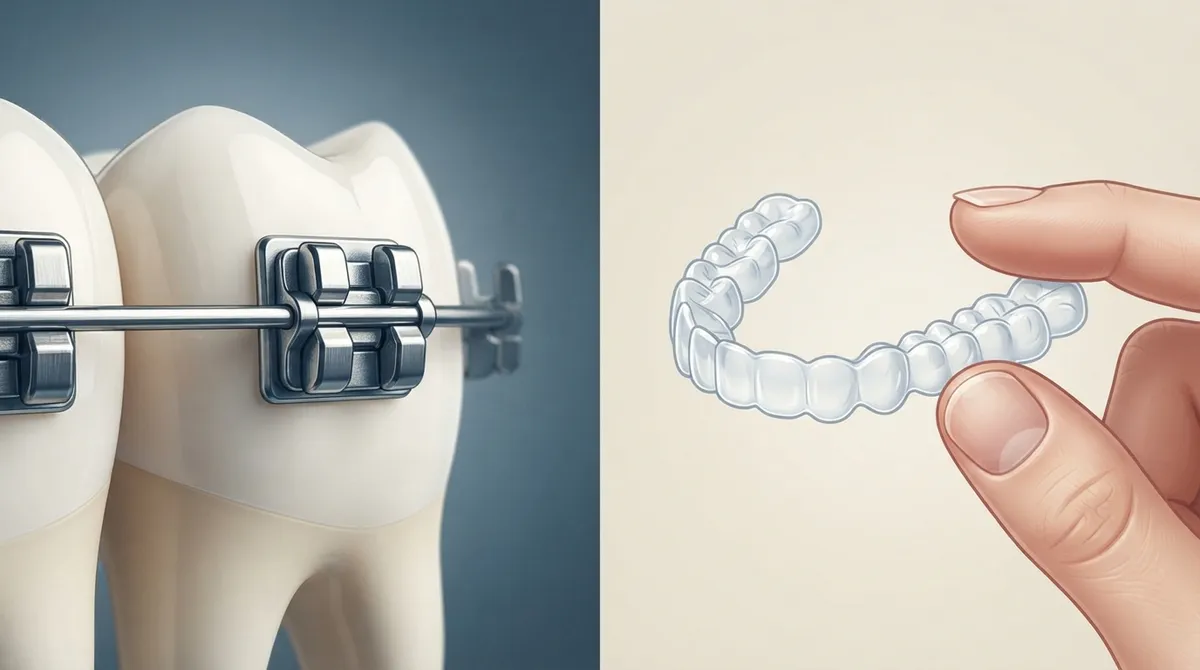
Key Takeaways
- Traditional braces are more effective for complex cases like severe crowding, large gaps, and significant bite misalignment, while Invisalign works best for mild to moderate alignment issues and requires consistent daily wear (20-22 hours) to be effective.
- Treatment timelines are comparable—Invisalign averages 12-18 months for adults versus 18 months to 3 years for braces—and both options achieve similar long-term results for simple cases when retainers are worn consistently after treatment.
- Invisalign offers superior comfort and lifestyle flexibility with removable trays for eating and easier oral hygiene, while traditional braces require more careful cleaning around brackets and wires but handle complex dental issues more reliably.
- Both treatments cost around $3,000 starting price with surprisingly small price gaps (Invisalign averages only ~$175 more than braces for comparable cases), and final costs depend on case complexity, treatment duration, and insurance coverage.
Trying to pick between Invisalign and traditional braces? You are not alone. Many parents, teens, and adults in Ocoee ask us this exact question every single week. It is a big decision, but it does not have to feel overwhelming.
At Charming Smiles of Ocoee, we help patients of every age find the right path to a straighter smile. Dr. Aliuska Lopez and our team love guiding families through this choice with honest, friendly advice. In this article, we will break down the real differences between Invisalign and traditional braces so you can feel confident about your next step. We will cover cost, comfort, treatment time, and more, using the latest facts and numbers for 2026.
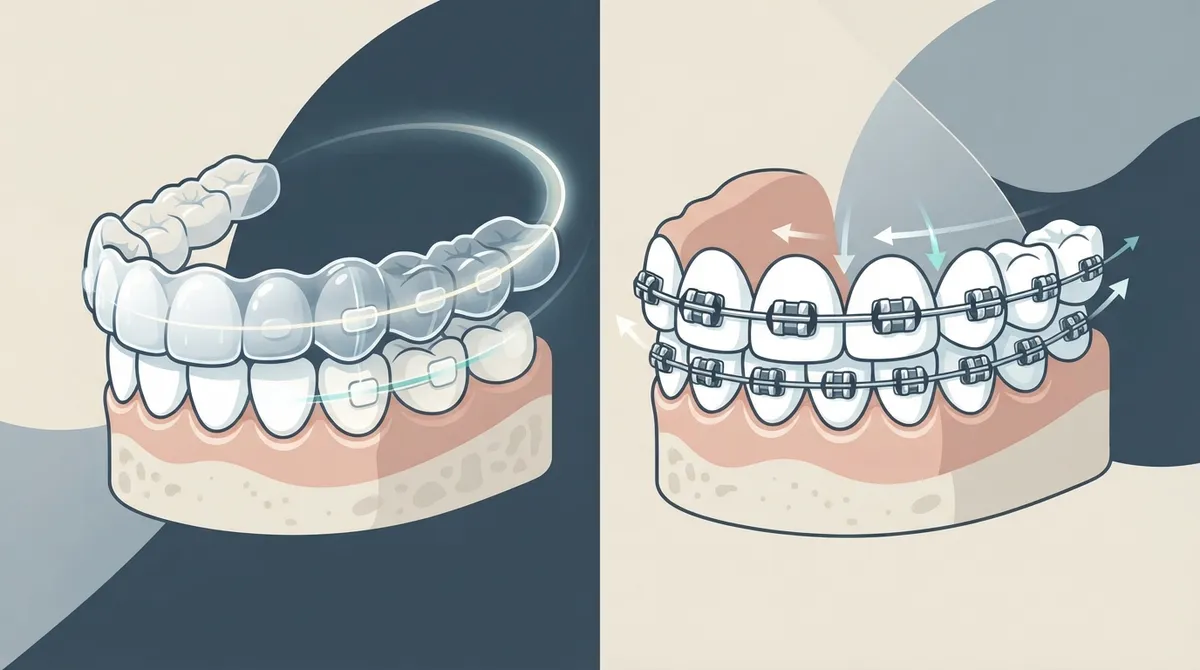
1. How Invisalign and Traditional Braces Actually Work
Traditional braces use metal or ceramic brackets glued to each tooth. A thin wire connects the brackets and slowly pulls teeth into place over time. Your dentist tightens this wire at regular visits to keep things moving.
Invisalign works differently. It uses a series of clear, custom-made aligner trays. You wear each tray for about one to two weeks, then switch to the next one in the series. Each new tray gently shifts your teeth a little closer to their final position.
Both options rely on steady, gentle pressure. But the way that pressure is applied is very different, and that difference matters for your daily life.
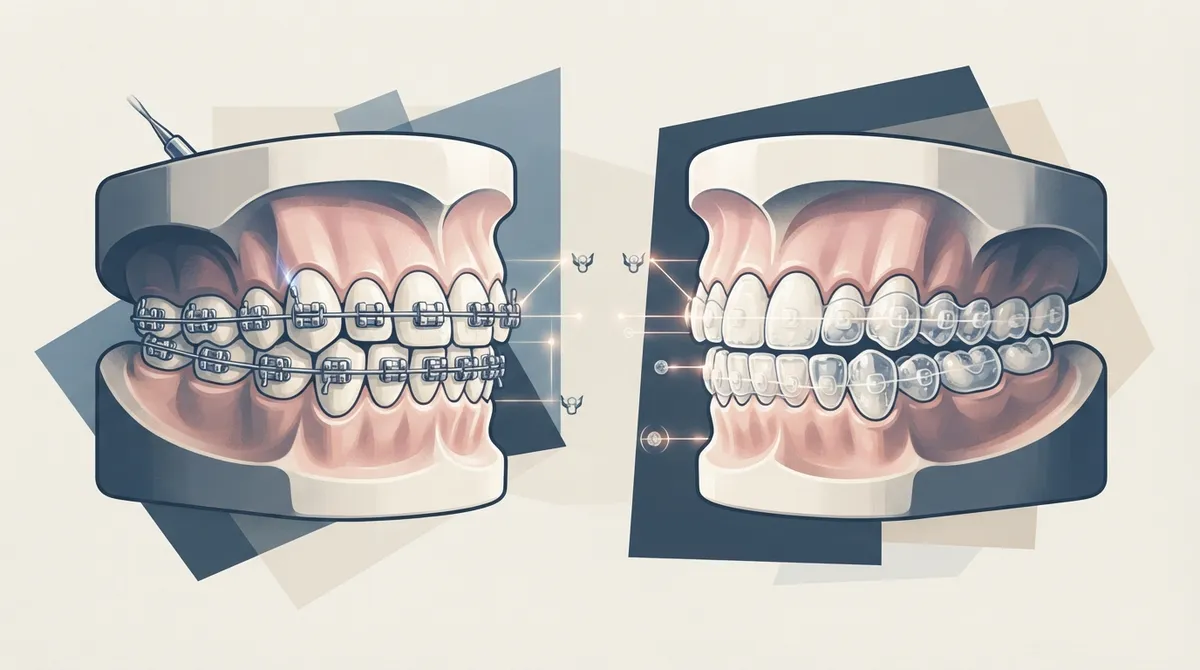
2. Which Option Fixes More Complex Dental Issues
This is one of the biggest factors in the invisalign vs traditional braces decision. Traditional braces are generally better for complex orthodontic cases such as severe crowding, large gaps, and significant bite misalignment.
Invisalign, on the other hand, works best for mild to moderate alignment problems. It also depends heavily on patient compliance, since the aligners must be worn consistently each day to work properly.
Here is a simple breakdown of which cases fit each option best:
- Mild crowding or spacing: Invisalign usually works great
- Moderate bite issues: Invisalign can often help, but results vary
- Severe crowding: Traditional braces are usually the stronger choice
- Large gaps between teeth: Traditional braces tend to close these more reliably
- Complex jaw alignment problems: Traditional braces are often recommended
During your orthodontics consultation, Dr. Lopez will look at your bite and tooth position to recommend the best fit for your specific smile goals.
3. Comparing Treatment Time: Invisalign vs Traditional Braces
Nobody wants to wear braces or aligners longer than they have to. So how do the timelines compare?
For adults, Invisalign treatment usually takes around 12 to 18 months on average. Traditional braces often take about 18 months to 3 years, depending on how complex the case is.
Interestingly, one comparative clinical study found that for simple Class I malocclusion cases, aligners actually took about 4.8 months longer than braces. Yet the final results and 6-month post-treatment stability were similar between both options for these simpler cases. This tells us that patient habits, like wearing aligners as directed, really do affect the timeline.
| Factor | Invisalign | Traditional Braces |
|---|---|---|
| Average adult treatment time | 12 to 18 months | 18 months to 3 years |
| Visibility | Nearly invisible | Visible metal or ceramic |
| Removable | Yes | No |
| Best for | Mild to moderate cases | Mild to severe cases |
| Oral hygiene ease | Easier, remove to brush | Requires extra care around wires |
4. Cost Comparison: What You Should Expect to Pay
Cost is often the deciding factor for many families. The good news is that both treatments usually fall in a similar price range.
Public-facing dental sources commonly place both treatment types starting around $3,000, with costs increasing based on case complexity and how long treatment takes. One dental review citing national data even reports Invisalign averaging only about $175 more than metal braces for comparable complexity in some adult cases.
That means the price gap is often smaller than people expect. Here are a few things that can affect your final cost:
- How complex your bite or crowding issue is
- How long your treatment plan will take
- Whether you need extra appliances like spacers or retainers
- Your dental insurance coverage and benefits
- Any current promotions or specials offered by your dental office
We know cost can feel stressful to think about. That is why we offer insurance & financing options and a helpful dental savings plan to make treatment more affordable. We also run current specials, including a free Invisalign consultation and $200 off Invisalign treatment, so you can start your smile journey without breaking the bank.
5. Comfort and Daily Life: Living With Invisalign vs Braces
Comfort matters a lot, especially for busy teens and adults who cannot afford a lot of downtime. Let's compare daily life with each option.
Traditional braces are fixed to your teeth. This means no removing them for meals, sports, or special events. Some patients find the brackets and wires cause soreness, especially right after adjustments. Food can also get stuck in the wires, which means extra brushing and flossing effort.
Invisalign aligners are removable, which many patients love. You can take them out to eat, brush, and floss like normal. This makes general dentistry hygiene routines much simpler during treatment. However, this removability is also why compliance matters so much. Aligners only work if you wear them 20 to 22 hours a day.
Here are some quick comfort comparisons:
- Eating: Invisalign wins, since you remove trays before meals
- Speaking: Both can cause minor speech changes at first, but most people adjust quickly
- Sports and activities: Invisalign offers more flexibility for active lifestyles
- Irritation: Braces can cause more cheek and lip irritation from metal parts
- Discretion: Invisalign is nearly invisible, while braces are clearly visible
6. Cleaning and Oral Hygiene During Treatment
Keeping your mouth clean during orthodontic treatment is important for avoiding cavities and gum problems. This is another area where the two options differ quite a bit.
Oral hygiene is usually easier with Invisalign because patients can remove the aligners to brush and floss normally. There is no need to navigate around brackets or thread floss under wires.
Traditional braces require more careful cleaning around brackets and wires. Patients often need special tools like floss threaders or water flossers to reach tricky spots. Skipping proper cleaning can lead to white spots or decay around the brackets.
Our hygiene team at Charming Smiles of Ocoee is always happy to show you simple techniques for keeping your smile healthy, whichever option you choose. Regular cleanings and checkups during treatment help catch small issues before they become bigger problems.
7. Life After Treatment: Retainers and Long-Term Results
Here is something both options have in common: retainers. Both Invisalign and traditional braces require retainer use after treatment to help maintain results, since teeth can shift back without retention.
Recent clinical evidence suggests that for simple malocclusions, aligners can achieve similar final occlusal outcomes to braces, even though treatment sometimes takes a bit longer with aligners. This means your long-term results can be just as strong with either choice, as long as you follow your dentist's instructions and wear your retainer as directed.
Skipping retainer wear is one of the most common mistakes patients make after finishing treatment. Teeth are naturally inclined to drift back toward their old positions, so consistent retainer use protects your investment for years to come.
Making the Right Choice for Your Smile
So, which is better: Invisalign or traditional braces? The honest answer is that it depends on your specific smile, your lifestyle, and your goals. Mild to moderate cases often do wonderfully with Invisalign, while more complex bite and crowding issues may need the extra strength of traditional braces.
The best way to know for sure is to schedule a consultation with a trusted dental team. Dr. Lopez and the caring staff at Charming Smiles of Ocoee will examine your smile, discuss your options, and help you choose the treatment that fits your life best. We proudly serve patients from all over Ocoee, and we would love to help your family too.
Curious what real patients say about their experience? You can visit us on Google — Charming Smiles of Ocoee to read reviews from smiling patients just like you. You can also connect with us on the Charming Smiles Facebook page or follow along on the Charming Smiles Instagram page for smile transformation photos and helpful tips.
For more general guidance on orthodontic care, the American Dental Association and the National Institutes of Health both offer helpful patient resources on braces versus clear aligner treatment that can add to your research.
Ready to talk about your options? You can easily book online at a time that works for you. If you are considering Invisalign specifically, check out our detailed guide on 7 Things You Need to Know About Invisalign in 2026 for even more helpful information.
Whether you choose Invisalign or traditional braces, our team is here to support you every step of the way. Give us a call us at (407) 378-3704 today to schedule your consultation and take the first step toward the confident smile you deserve.
FAQs
Q: Which is better: Invisalign or traditional braces?
A: It really depends on your smile! Invisalign is wonderful for mild to moderate alignment issues and fits busy lifestyles, while traditional braces tend to handle severe crowding and complex bite problems more reliably. Our team at Charming Smiles of Ocoee will help you figure out which one matches your unique needs.
Q: Is Invisalign as effective as braces for complex cases?
A: For simple to moderate cases, Invisalign can achieve results very similar to braces. However, traditional braces are usually the stronger choice for severe crowding, large gaps, or significant bite misalignment, so we always recommend a personalized consultation first.
Q: How much does Invisalign cost compared with braces?
A: Both options often start around $3,000, and the price gap can be surprisingly small. In fact, some national data shows Invisalign averaging only about $175 more than braces for similar cases, and we offer flexible financing to make either option easier on your budget.
Q: How long does Invisalign take versus traditional braces?
A: Invisalign usually takes about 12 to 18 months for adults, while traditional braces can take 18 months to 3 years depending on complexity. Simple cases sometimes take slightly longer with aligners, but final results tend to be just as strong.
Q: Do you still need a retainer after Invisalign or braces?
A: Yes, absolutely! Both treatments require a retainer afterward to keep your new smile in place. Teeth naturally want to shift back over time, so wearing your retainer as directed protects all the hard work you put into your treatment.