Can You Get Implants If You Have Bone Loss?
Wondering if you can get implants with bone loss? Learn how grafts, sinus lifts, and smart planning can make implants possible for many patients.
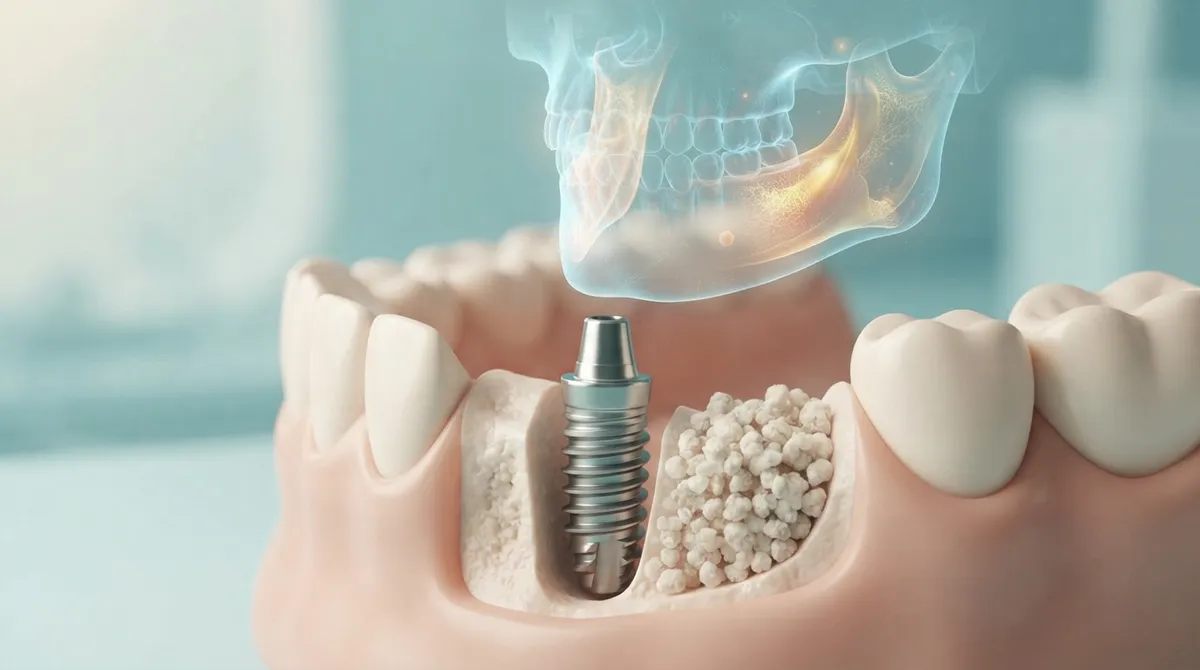
Key Takeaways
- Yes, many people with jawbone loss can still get dental implants; bone loss does not automatically rule you out, but your dentist may need extra planning or a bone-rebuilding procedure first.
- Candidacy depends on how much healthy bone remains, where the loss is, gum health, and overall health, so a personal exam with 3D imaging is essential.
- Options like bone grafting, ridge augmentation, and sinus lifts can rebuild bone, and a graft and implant may sometimes be placed in the same visit.
- Gum disease or infection must be treated before implant placement, since healthy gums are key to implant success.
- Research shows implants in grafted bone have roughly 90% to 100% survival at 10 years in some studies, though results vary by person, graft type, and aftercare.
- Replacing missing teeth sooner, quitting smoking, managing conditions like diabetes, and keeping up with dental care help protect your jawbone and implant success.
If your dentist has told you that you have jawbone loss, you may be feeling a little worried. Maybe you have been missing a tooth for years. Maybe gum disease has taken a toll. And now you are wondering, can you get implants if you have bone loss? It is one of the most common questions we hear, and we are happy to share some good news.
In many cases, the answer is yes. Bone loss does not automatically rule out dental implants. It simply means your dentist may need a little extra planning, and sometimes a helpful procedure, before placing the implant.
In this guide, we will walk through why bone loss happens, how dentists decide if implants are possible, and what options can rebuild your jaw. Whether you are a busy parent, a senior who has lost teeth over the years, or someone who has put off dental care because of nerves, you are in the right place. Let's take it one friendly step at a time.
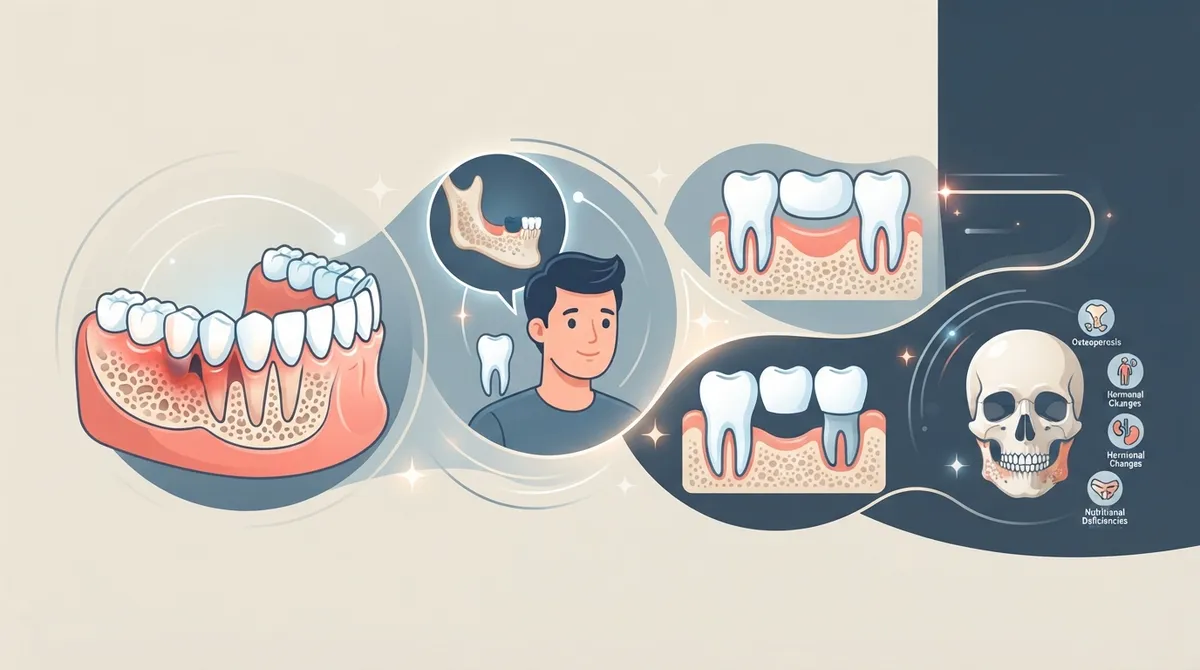
Why Does Jawbone Loss Happen in the First Place?
Your jawbone stays strong because your teeth give it regular work to do. Every time you chew, the roots of your teeth send tiny signals to the bone. Those signals tell your body to keep that bone healthy and dense.
When a tooth is gone, those signals stop. Over time, the bone in that spot can shrink. Think of it like a muscle you stop using. Without a job to do, it slowly gets smaller.
Bone loss can also come from other causes. Here are the most common ones:
- Tooth loss: The longer a space stays empty, the more bone can melt away.
- Gum disease: Advanced periodontal disease can destroy the bone that holds teeth in place.
- Infection: A deep tooth infection can damage nearby bone.
- Trauma: An injury to the mouth or jaw can affect the bone.
- Long-term denture wear: Traditional dentures sit on the gums and do not stimulate the bone underneath.
The good news is that modern dentistry has smart ways to work with all of these situations.
So, Can You Get Implants If You Have Bone Loss?
Yes, many people with bone loss can still get dental implants. Candidacy depends on a few things: how much bone you have left, where the loss is, how healthy your gums are, and your overall health.
There is no single magic number that works for every person. A dentist needs to look at your unique mouth, your anatomy, and the type of tooth replacement you want. That is why a personal exam matters so much.
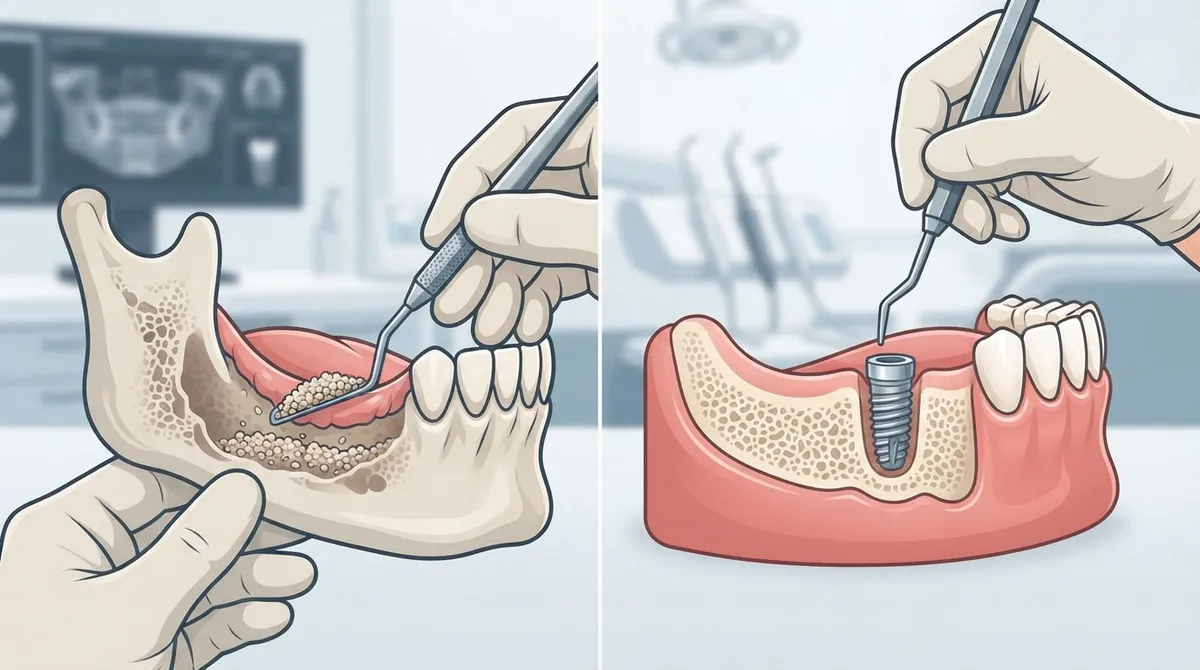
If there is enough healthy bone, your implant may be placed right away. If there is not enough, your dentist may suggest a procedure to rebuild the bone first. In some cases, a graft and an implant can even be done in the same visit. In other cases, the graft needs time to heal before the implant goes in.
How Do Dentists Check Your Bone Before an Implant?
Planning is the secret to a successful implant. Before any treatment, your dentist will study your jaw closely. This usually includes:
- A full dental exam: Your dentist checks your teeth, gums, and bite.
- Digital imaging: X-rays, and often 3D imaging, show the height, width, and density of your bone.
- A health review: Conditions like diabetes, smoking, and certain medications can affect healing.
- A gum health check: Active gum disease or infection must be treated first.
- A personalized plan: Your dentist explains your options, timeline, risks, and expected results.
At Charming Smiles of Ocoee, Dr. Aliuska Lopez takes time to explain every step in plain language. Our spa-like office is designed to keep you calm, so you can ask all the questions you want. If you feel nervous about dental visits, you are not alone, and our team is here to help you feel at ease.
What Options Can Rebuild Bone for Implants?
If your jaw needs a little help, there are well-known ways to rebuild it. Here is a quick look at the most common choices.
| Procedure | What It Does | Often Used When |
|---|---|---|
| Bone grafting | Adds bone material to rebuild lost volume | The jaw is too thin or short for an implant |
| Ridge augmentation | Rebuilds the width or height of the jawbone ridge | The ridge has shrunk after tooth loss |
| Sinus lift | Adds bone beneath the sinus in the upper back jaw | Bone is limited near the sinus area |
| Modified implant plan | Adjusts the size, angle, or placement of implants | Some bone remains but placement needs extra care |
Bone Grafting
A bone graft adds material to the area that needs support. The graft material can come from your own body, a human donor, an animal source, or a synthetic material. Your dentist will choose the best type for your needs. Over time, your own bone grows into the graft and makes the area stronger.
Sinus Lift
The upper back teeth sit close to the sinus. When bone is lost there, an implant may not have enough support. A sinus lift gently raises the sinus floor and adds bone below it. It is a targeted procedure, so it is only used for certain locations.
Treating Gum Disease First
If gum disease or infection is part of the story, it must be treated before an implant is placed. Healthy gums help implants last. Treatments like scaling and root planing and other periodontal care can set the stage for success.
How Long Does Treatment Take When Bone Grafting Is Needed?
Many people ask about timing, and that is a smart question. The honest answer is that it varies. Healing depends on the size of the graft, your overall health, and how your body responds.
If a graft is needed first, you may need several months of healing before the implant is placed. If your dentist can do both at once, the timeline may be shorter. Your dentist will give you a personal timeline after your exam, so you know what to expect.
Here is a general idea of the path:
- Consultation and imaging
- Treatment of any gum disease or infection
- Bone grafting or sinus lift, if needed
- Healing time for the graft
- Implant placement
- Healing as the implant bonds with the bone
- Placement of your final crown, bridge, or denture
It may sound like a lot, but each step is built to give you a strong, lasting result.
How Well Do Implants Work in Grafted Bone?
Research is encouraging. A 2024 systematic review of implants in grafted and non-grafted sites reported survival rates of roughly 90% to 100% at 10 years in the included studies. Another 2024 review looked at implants placed in areas rebuilt with larger grafts taken from other parts of the body. It reported implant survival estimates between about 92% and 96%, with an average follow-up of around 92 months.
These numbers are hopeful, but they are not a promise for any one person. Those studies often cover complex cases, and results depend on graft type, health, and aftercare. Think of the statistics as a sign that rebuilt bone can support implants well, not as a guarantee.
Healthy habits matter too. Not smoking, keeping up with general dentistry visits, and brushing and flossing daily all give your implant its best chance.
What If You Are Not a Candidate for Implants?
Sometimes a dentist may decide that implants are not the best fit right now. That is okay, because you still have good choices. You might consider:
- Crowns and bridges that use neighboring teeth for support
- Dentures, either full or partial, for a comfortable, natural-looking smile
- Treating the underlying issue first, then revisiting implants later
Every smile is different, and the best option is the one that fits your health, goals, and budget. If you are weighing options, our guide on dental implants vs. bridges can help.
What About Cost and Payment?
Bone grafting and other prep work can add to the overall cost, so it helps to plan ahead. The good news is that you do not have to handle it all at once. Our practice accepts many major dental insurance plans and offers flexible financing so you can spread payments over time. You can explore insurance and financing options, our dental savings plan, and current specials, including a free dental implant consultation and $200 off dental implants.
For a closer look at pricing, see our article on how much dental implants cost in Ocoee, FL.
Tips to Protect Your Jawbone Going Forward
Whether or not you need a graft, you can take steps to keep your bone as healthy as possible. Here are a few simple ideas:
- Replace missing teeth sooner rather than later, so the bone keeps getting stimulation.
- Treat gum disease early with regular cleanings and checkups.
- Quit smoking, which can slow healing and raise the risk of implant problems.
- Manage health conditions like diabetes with your doctor's help.
- Follow your dentist's aftercare instructions closely.
Small habits add up to big protection for your smile. You can also read 5 dental implant mistakes that could cost you thousands to help you avoid common pitfalls.
Ready to Find Out Where You Stand?
Bone loss can feel discouraging, but it is far from the end of the road. With the right planning, many patients go on to enjoy strong, natural-looking implants. The best first step is a conversation with a dentist who listens and explains things clearly.
At Charming Smiles of Ocoee, we combine advanced technology, gentle care, and a relaxing environment to help every patient feel comfortable. Dr. Aliuska Lopez and our team will look at your bone, answer your questions, and build a plan that fits your life. You can see what patients say about us when you visit our Charming Smiles of Ocoee location on Google, and you can follow our latest smile stories on our Charming Smiles Instagram page.
Ready to take the next step? Book online for your free implant consultation, or call us at (407) 378-3704. You can also find our location at 315 West Rd, Ocoee, FL 34761. We would love to help you smile with confidence again.
FAQs
Q: How much jawbone is needed for a dental implant?
A: There is no single amount that works for everyone. Your dentist looks at the height, width, and density of your bone using imaging, then matches that to the implant plan. If there is not enough, a graft can often help.
Q: Can a bone graft and a dental implant be done at the same time?
A: Sometimes, yes! In some cases the graft and implant can be placed in one visit. In others, the graft needs time to heal first, and your dentist will tell you which path fits your mouth.
Q: What is a sinus lift, and when is it needed?
A: A sinus lift adds bone below the sinus in the upper back jaw when there is not enough support for an implant. It is a targeted procedure used only for certain spots, not a fix for all bone loss.
Q: How long should I wait after a bone graft before getting an implant?
A: Healing time varies based on the graft size, your health, and how your body responds. Your dentist will give you a personal timeline, so you know just what to expect.
Q: What causes jawbone loss after losing a tooth?
A: Your jawbone stays strong when teeth stimulate it during chewing. Once a tooth is gone, that stimulation stops and the bone can slowly shrink. Gum disease, infection, and injury can also play a part.