Will Insurance Cover Your Dental Crown in 2026?
Learn how dental insurance covers crowns, what costs to expect, and how Charming Smiles of Ocoee helps you save.
Key Takeaways
- Most dental plans cover crowns at 50% after you meet your deductible, but coverage varies by plan—always request a written pretreatment estimate to know your exact out-of-pocket cost before treatment begins.
- Many individual dental plans require 6-12 month waiting periods before covering major services like crowns, though employer-sponsored plans often waive this requirement entirely.
- Your annual maximum benefit (typically $1,000-$2,000) may not cover the full crown cost, leaving you responsible for the difference—schedule treatment early in your benefit year to maximize coverage.
- Insurance typically only covers crown replacement once every 5-7 years, so choosing a durable, well-fitted crown from an experienced dentist is essential to avoid paying out-of-pocket for premature replacements.
- In-network dentists offer significantly better savings than out-of-network providers due to negotiated fees, and PPO plans offer more dentist choice than DHMO plans which use copayments instead of percentages.
- Related procedures like root canals, core buildups, and temporary crowns each have separate insurance coverage rules, so request a full cost breakdown showing all associated treatments and their individual coverage amounts.
Do you need a dental crown but feel worried about the cost? You are not alone. Many patients in Ocoee wonder how much their insurance will actually pay. The good news? Most dental plans do help cover crowns. But the details can feel confusing.
At Charming Smiles of Ocoee, we help patients understand their benefits every single day. Our friendly team wants you to feel confident before you sit in the chair. This guide breaks down insurance coverage for dental crowns in simple, easy words. By the end, you will know exactly what questions to ask and what to expect.
What Are Dental Crowns and Why Do You Need One?
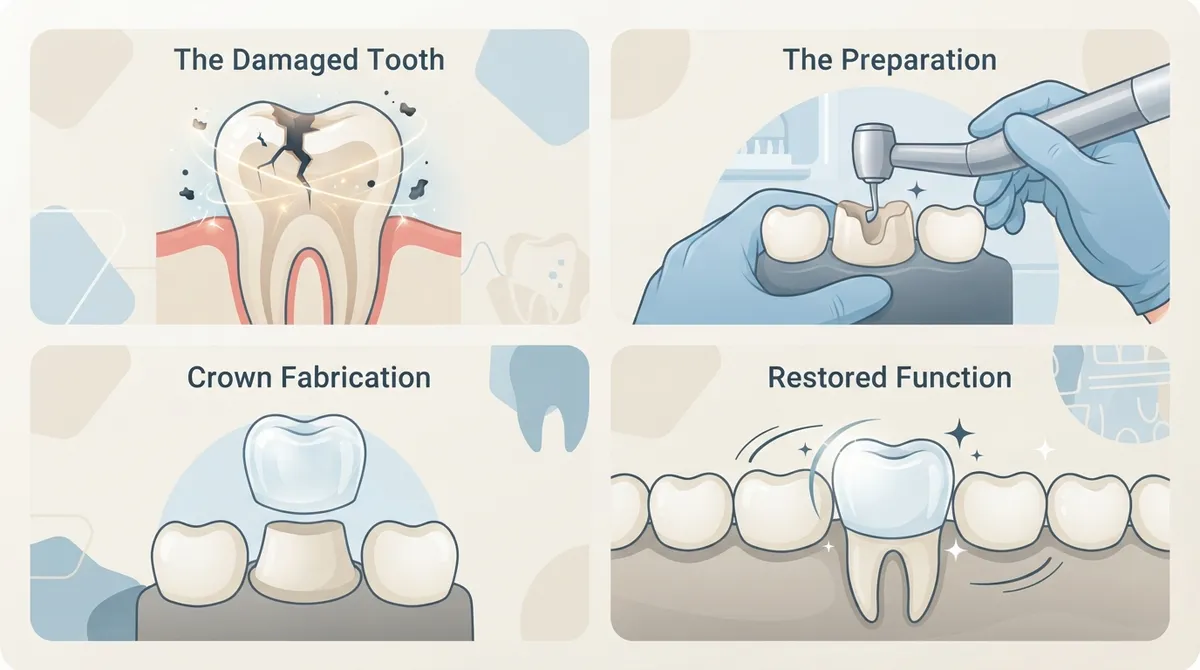
A dental crown is a cap that covers a damaged tooth. Think of it like a helmet for your tooth. It protects the tooth from breaking further. Dentists use crowns after root canals, big cavities, or cracked teeth. They also use them to fix worn-down or oddly shaped teeth.
Crowns come in different materials. Some are porcelain. Some are zirconia. Others use gold or a mix of metal and porcelain. Each material has pros and cons for strength, look, and cost. Our team at crowns & bridges services can help you pick the right one for your smile and your budget.
How Does Dental Insurance Usually Cover Crowns?
In the United States, dental crowns fall under "major restorative services." This group also includes bridges and dentures. Most dental plans do offer some coverage. But it depends on your specific policy.
A common coverage pattern is called the "100/80/50" model. Here is how it works:
- Preventive care (cleanings, exams) is often covered near 100%
- Basic services (fillings) are often covered near 80%
- Major services (crowns) are often covered near 50%
This means your insurance may pay about half the cost after you meet your deductible. Keep in mind, this percentage is not a strict rule. It varies by plan. Some plans pay more. Some pay less. And this percentage often only applies to your dentist's negotiated fee, not the full retail price if you go out-of-network.
What Costs Should You Expect Before Insurance Pays?
Before your insurance company pays anything, a few things need to happen. Understanding these steps helps you plan ahead.
- Meet your deductible. Most individual plans have a deductible around $50 to $150 per year.
- Satisfy any waiting period. Many plans require you to wait 6 to 12 months before covering major work like crowns.
- Check your annual maximum. Most plans cap benefits between $1,000 and $2,000 per year.
- Confirm network status. In-network dentists usually save you more money.
- Verify frequency limits. Insurance typically only pays for a crown replacement once every 5 to 7 years.
These steps might sound like a lot. But our team walks you through each one. We want you to feel prepared, not stressed.
Why Do Waiting Periods Exist?
Waiting periods can feel frustrating, especially if you're in pain. Insurance companies use waiting periods to prevent people from buying a plan just before a big procedure. It protects the insurance pool overall.
The good news? Not everyone faces a waiting period. Employer-sponsored plans often skip this step. Some insurers also waive the wait if you can show proof of continuous prior dental coverage. It never hurts to ask your provider directly.
What If Your Crown Costs More Than Your Annual Maximum?
This happens more often than you'd think. Crowns are expensive procedures. If your plan's annual maximum is $1,000, but your crown costs $1,200, you will owe the difference.
Here's a helpful table showing how this might break down:
| Scenario | Crown Cost | Insurance Pays (50%) | Your Responsibility |
|---|---|---|---|
| Annual maximum not reached | $1,000 | $500 | $500 |
| Annual maximum reached mid-treatment | $1,200 | $300 (remaining benefit) | $900 |
| Out-of-network dentist | $1,200 | $400 (lower negotiated rate) | $800 |
This is why we always recommend asking about insurance & financing options before starting treatment. Planning ahead saves stress later.
What Other Procedures Might Affect Your Crown Coverage?
A crown rarely stands alone. Other treatments often happen alongside it. Each one may have its own coverage rules. Here are some common add-ons:
- Core buildup (to support the crown)
- Temporary crown (while your permanent one is made)
- X-rays (to check the tooth)
- Root canal treatment (if the tooth is infected)
- Lab fees (for crown fabrication)
If you're facing a tooth infection, you might also need root canals before your crown. Each step may fall under a different insurance category. That's why a full breakdown from your dentist is so helpful.
Do PPO and DHMO Plans Cover Crowns Differently?
Yes, they do. It helps to understand the difference before choosing your plan.
PPO Plans
PPO plans usually follow the percentage-based model we discussed earlier. You have more freedom to choose your dentist. Staying in-network saves you the most money.
DHMO Plans
DHMO plans work differently. They use contracted fees and copayments instead of percentages. You typically must choose a dentist within their network. Some DHMO plans also require referrals for certain treatments.
Not sure which type you have? Our staff can look at your card and explain your plan's structure quickly.
Why Should You Get a Pretreatment Estimate?
This is one of the smartest steps you can take. A pretreatment estimate, sometimes called a predetermination of benefits, tells you what your insurance plans to pay before you commit to treatment.
Here's what a good estimate should show:
- The exact procedure codes for your crown
- Your major-service coverage percentage
- Your remaining deductible
- Your remaining annual maximum
- Any waiting period status
- Frequency limitations
- Your estimated out-of-pocket cost
Keep in mind, a predetermination is not a guarantee of payment. But it gives you a strong idea of what to expect. Our team at Charming Smiles of Ocoee handles this process for you, so you're never left guessing.
Does Insurance Cover All Crown Materials Equally?
Not always. Some plans limit coverage based on the material used. For example, a plan might fully cover a metal crown on a back tooth but only partially cover porcelain on that same tooth. This is because porcelain is often seen as more cosmetic.
If you want a natural-looking smile without extra costs, ask your dentist which materials your plan supports best. Learning about cosmetic dentistry options can also help you understand which materials blend beauty with affordability.
What About Medicaid and Medicare Coverage?
This is a common question we hear. Original Medicare typically does not cover routine dental work, including crowns. Some Medicare Advantage plans do offer dental add-ons, but coverage varies widely.
Medicaid coverage for adult dental crowns depends on your state. Some states offer generous coverage. Others offer very limited benefits. It's worth checking your specific state's Medicaid dental policy directly.
How Can You Lower Your Out-of-Pocket Crown Cost?
Nobody likes surprise bills. Here are some smart ways to reduce your costs:
- Choose an in-network dentist whenever possible
- Schedule treatment early in your benefit year to maximize your annual limit
- Ask about a dental savings plan if you lack insurance
- Explore flexible payment plans for the remaining balance
- Check for seasonal current specials at your dental office
- Request a written estimate before starting any treatment
At Charming Smiles of Ocoee, we also offer financing through CareCredit, Alphaeon Credit, and Cherry Financing. This helps break your remaining balance into manageable monthly payments.
Why Choose Charming Smiles of Ocoee for Your Crown?
Getting a crown doesn't need to feel stressful. Dr. Aliuska Lopez and her caring team make the process smooth from start to finish. We accept many major insurance plans, including MetLife, Delta Dental, Cigna, Aetna, Humana, and more. If you're not sure whether your plan is accepted, just give us a call and we will verify your benefits for you.
Our office also offers a relaxing, spa-like environment. Soft music, cozy blankets, and gentle care help ease any dental anxiety you may feel. Many patients tell us it's the most comfortable dental visit they've ever had. You can visit us on Google — Charming Smiles of Ocoee to read real patient reviews about their crown experiences.
We also stay active on social media, where we share smile transformations and helpful tips. Follow along on our Charming Smiles Facebook page or check out before-and-after photos on our Charming Smiles Instagram page.
What Should You Bring to Your Crown Consultation?
Preparation makes your visit faster and smoother. Bring these items with you:
- Your dental insurance card
- A list of current medications
- Any previous dental X-rays, if available
- Questions about coverage, cost, or materials
Our front desk team will verify your benefits and walk you through your estimated costs before treatment begins. No surprises. No confusion. Just clear answers.
Trusted Guidance for Your Dental Insurance Questions
Understanding insurance coverage for dental crowns takes a little homework, but you don't have to do it alone. According to the American Dental Association, coverage details always depend on your specific policy, so checking with your provider directly remains the best step. Charming Smiles of Ocoee is proud to serve as a trusted resource for Ocoee families navigating these decisions every day.
Ready to get started? You can book online in just a few minutes. Our scheduling team makes it easy to find a time that works for your busy life.
Final Thoughts on Insurance Coverage for Dental Crowns
Dental crowns protect your smile and your oral health. Insurance can make this important treatment more affordable, but the details matter. Deductibles, waiting periods, annual maximums, and network status all play a role in your final cost.
The best way to avoid surprises is simple. Ask questions. Request a written estimate. And choose a dental team that explains things clearly, like we do at Charming Smiles of Ocoee.
Ready to protect your smile with confidence? Visit our location in Ocoee near Publix, or call us at (407) 378-3704 today. Our friendly team is here to help you understand your benefits and get the healthy, beautiful smile you deserve.
FAQs
Q: Does dental insurance cover crowns?
A: Yes, in most cases! Dental crowns are usually considered a major restorative service, and many plans cover about 50% of the cost after your deductible. Coverage does depend on your specific plan, so it's always smart to check with your provider first.
Q: How much will I pay out-of-pocket for a crown with insurance?
A: It really depends on your plan's deductible, annual maximum, and coinsurance rate. Many patients end up paying somewhere between 30% and 50% of the total cost. Our team at Charming Smiles of Ocoee can give you a clear written estimate before you start.
Q: Is there a waiting period before insurance covers a crown?
A: Many individual plans do require a waiting period, often 6 to 12 months, before covering major services like crowns. The good news is that employer-sponsored plans sometimes skip this waiting period entirely. Give us a call and we can help you check your specific plan details.
Q: How often will insurance pay for a replacement crown?
A: Most insurance plans only cover crown replacement once every 5 to 7 years. If your crown fails before that window, you may need to cover more of the cost yourself. This is one more reason to choose a durable, well-fitted crown from an experienced dental team.
Q: Should I get a pretreatment estimate before my crown procedure?
A: Absolutely, yes! A pretreatment estimate shows you what your insurance plans to pay and what you'll likely owe. It's not a guarantee, but it helps you avoid financial surprises. We handle this process for our patients at Charming Smiles of Ocoee every day.